
Resilience for a Changing World: A Year of Change, Progress, and Renewed Purpose
Fifteen years ago, we set out to prove that modern, programmable infrastructure did not have to be dictated by proprietary software or controlled by a single vendor. We believed that open collaboration could produce code capable of running the world. The events of the past year have only reinforced that belief. In a moment when demand for local infrastructure is at an all-time high, the OpenInfra community continues to demonstrate that shared innovation is the right path.
In 2025, we built on that foundation. Joining forces with the Linux Foundation was not just a structural milestone but also a signal of our commitment to shaping the next chapter of open infrastructure together with the communities that create the technologies that run today’s workloads. Working together gives us the scale, reach, and alignment needed to provide the secure, high-performance, and interoperable infrastructure that those new workloads require. At the same time, we remain focused on the work that has defined the OpenInfra mission since the creation of the Foundation: building and sustaining the world’s most proven open source infrastructure software, together.
Across OpenInfra projects, that mission was reflected in tangible progress. The resurgence of OpenStack continued, with the user survey now reporting more than 55 million documented cores in production. That resurgence included two successful releases, renewed investment from contributors, making significant progress in reducing legacy technical debt and growing momentum from organizations moving toward more open, local and vendor-neutral infrastructure. Kata Containers continued to gain momentum with a rapid release cadence and wider industry adoption, highlighted by its integration into Google’s Agent Sandbox at launch and its growing use at NVIDIA to secure AI workloads. StarlingX progressed with two major releases and renewed its Kubernetes conformance, thereby reinforcing its long-term reliability for edge and telecom environments. And Zuul enabled even more development teams to properly test and continuously deliver and integrate their complex codebases, bringing safety in an increasingly software-defined world, particularly in the auto industry with users like BMW and Volvo.
The OpenInfra community’s visibility grew as well through global events, technical white papers, and the continued expansion of the University Partnership Program, which is essential to addressing the infrastructure talent gap we all see ahead. We also made progress in strengthening the Foundation’s financial resilience, welcoming new members, engaging in new geographies, and delivering a vibrant OpenInfra Summit Europe. Key themes from OpenInfra Summit Europe were covered by Computer Weekly and ZDNet. Finally, as policymakers include open source in attempts to regulate products with software elements, we ensured that the OpenInfra community has a voice where it matters and helps shape the incoming regulatory environment.
I encourage you to explore the details of these achievements and many more in the pages that follow. Together they tell a clear story. OpenInfra is no longer a bold experiment. It is proven infrastructure, and it succeeds because this community has shown again and again that open collaboration produces better outcomes than closed development. Our developers, operators, and advocates understand what it takes to build systems that last, and that is why OpenInfra continues to expand into new domains and new workloads.
As we look to 2026, we do so with clarity of purpose and a steady sense of optimism. Together with the Governing Board, we have outlined several key priorities that will guide our efforts. In this first full year within the Linux Foundation, we will deepen the synergies with the wider organization to make the most of it, while making sure our operational model breaks even. We want to support and bring visible improvement to each of our OpenInfra Foundation projects. The world now expects infrastructure that they can be sovereign with: local, controllable, yet interoperable. Secure, yet high-performance. Sustainable, yet ready for accelerated compute. Meeting those expectations is the work before us, and we are prepared for it.
Thank you for being part of this community and for helping build the future of open infrastructure.
Thierry Carrez
General Manager, OpenInfra Foundation
In 2025, goals were set to strengthen the resilience and sustainability of the OpenInfra Foundation. These goals were measured throughout the year at OpenInfra Governing Board meetings, which were open to the public.
The goals are:
- Increase Financial Resilience
- Sustain OpenStack Resurgence
- Raise Foundation and Projects Visibility
Increase Financial Resilience
Starting from a place of financial stability lays the groundwork for strengthening the long-term sustainability of the OpenInfra Foundation. The fundamental strategy in sustaining the OpenInfra Foundation’s financial resilience in 2025 rests with nurturing a global Member ecosystem aligned with the mission and goals set by the Foundation. Alignment around relevant market changes and demands, including digital sovereignty, VMware migration, and AI, not only engaged current members, but also recruited new organizations, including Platinum members Cachengo and Viettel as well as Silver members Pure Storage, KT Cloud, Digital China, Bai Xin Information Technology Co., Arctera, Huakun Zhenyu, Netways, Sichuan Hongxin, and CECloud. This $300,000 net increase in Foundation membership revenue, led by Jimmy McArthur and Horace Li, laid the groundwork for a strong revenue stream, resulting in the strongest financial foundation seen at the OpenInfra Foundation in the past several years.
Coupled with the increase in OpenInfra Foundation Membership revenue, the Foundation staff prioritized diversifying revenue streams and savings for long-term resilience. This included a profitable European Summit, a success which was heavily impacted by the regional relevance of the prioritized market trends. The OpenInfra Foundation staff secured in-kind infrastructure donations for 2026 from VEXXHOST (valued at $100K toward web hosting) and AWS (valued at $40K toward an OpenSearch cluster for OpenStack development), reducing future operating costs while supporting core project development. Additional infrastructure resources totalling over $100K per year are directly provided to OpenDev from OVHCloud, Rackspace, and VEXXHOST.
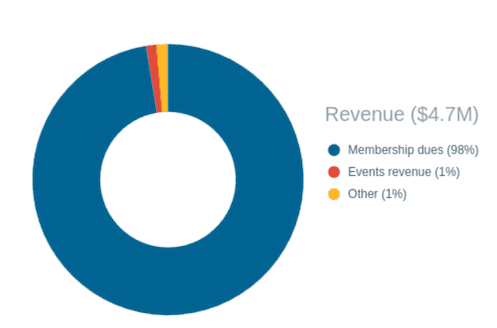
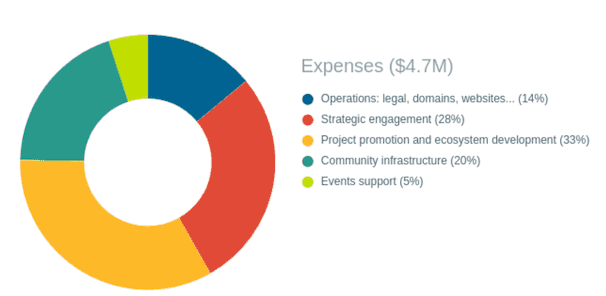
Strategic initiatives throughout the year further supported OpenInfra’s financial resilience. Joining forces with the Linux Foundation unlocked shared resources, increased operational efficiencies, and elevated visibility for OpenInfra technologies, a process with multiple, simultaneous moving parts and processes managed by Wes Wilson. A significant shift for the global open source industry, this announcement was covered by multiple outlets, including The Register and TechCrunch. This collaboration also directly led to the recruitment of Cachengo, CECloud, KT Cloud, and Pure Storage as OpenInfra Members and to Viettel’s upgrade to Platinum.
Foundation staff also invested in building new geographic and technical growth channels to strengthen long-term growth. Focused visits by Allison Price and Jimmy McArthur to Korea in March and Vietnam in July helped advance opportunities in Southeast Asia, a strategically important region for OpenInfra and open source as a whole. This resulted in local coverage including 오케스트로, '얼리 액세스 테크 포럼' 성료 in Korea and VietOpenInfra 2025: Thu hút đông đảo doanh nghiệp công nghệ danh tiếng in Vietnam.
Sustain OpenStack Resurgence
In 2025, the OpenInfra community celebrated OpenStack’s 15th birthday, a milestone marking a decade and a half of production maturity and innovation, particularly well-timed with a renewed interest in OpenStack. The OpenInfra Foundation identified sustaining this OpenStack resurgence as a critical goal to maintain OpenStack’s relevance in a quickly changing infrastructure landscape.
A key catalyst for this resurgence was the ongoing fallout from the increase in licensing prices following Broadcom’s acquisition of VMware in 2023. To support organizations that are redefining their virtualization strategy, the OpenStack community published the VMware Migration Guide, which helped operators confidently transition from legacy VMware environments to OpenStack.
Additionally, the exponential market momentum behind AI use cases, from inference and training to models and agents, continues to introduce new infrastructure requirements. As organizations seek alternatives to proprietary virtualization platforms and scalable infrastructure for AI, OpenStack re-emerged as a strategic choice, supported by new releases, expanding community investment, and continued technical evolution across the ecosystem. To support this demand and shed light on OpenStack’s feature relevance, the community, led by Kendall Nelson, delivered the OpenStack for AI white paper, which demonstrated how OpenStack provides a cost-effective, interoperable platform for modern AI workloads.
On the software side, the OpenStack community also delivered two milestone releases, 2025.1 ("Epoxy") and 2025.2 ("Flamingo"), each contributing important advancements. Epoxy, a SLURP release, expanded OpenStack’s capabilities as a VMware alternative, strengthened support for AI-focused hardware, added impactful security enhancements, and continued the long-term effort to pay down technical debt, including progress toward the removal of eventlet, a major community goal. Flamingo, which saw an increase in contributors and code changes, built on this momentum by improving scalability, reliability, and operator experience. These releases together represent the modern, modular, and sustainable OpenStack that organizations are deploying at any scale.
Strengthening the feedback loop between operators and developers continues to be a priority among all OpenInfra project communities. Led by Ildikó Váncsa, operator-focused engagement was revitalized through the Ops Radio Hour, a streamlined approach to OpenStack Ops outreach that will continue in 2026. Another avenue where feedback from production users is shared with developers is through coordination with OpenDev, the collaboratory for open source software development at scale supported by the OpenInfra Foundation. Experience from this collaboration was shared by Rackspace and VEXXHOST this year.
OpenStack’s relevance also continued to rise in the broader open source landscape. The Linux Foundation now highlights OpenStack as a key project in its standard boilerplate for every press release, underscoring its foundational role across open source. Real-world impact was further demonstrated through new case studies—including NUBO, BT Group, Sicredi, FPT Group, Walmart, the European Centre for Medium-Range Weather Forecasts, Indiana University, Cleura, and more—which showcase OpenStack’s impact for digital sovereignty, improvement in upgrades, ability to manage AI workloads, and scalability in production environments.
These trends culminated in the latest OpenStack User Survey, which reported 55 million cores of OpenStack in production, an all-time high and a clear signal of sustained, global-scale adoption. As organizations modernize their infrastructure strategies, OpenStack’s resilience, maturity, and active community ensure it remains the trusted backbone for open cloud innovation.
Improving Contributor Experience in the OpenStack Community
This year, OpenInfra community managers Ildikó Váncsa, Jeremy Stanley, and Clark Boylan began working with the OpenStack community to collect input on contributors' experience, identify bottlenecks and inefficiencies, and develop strategies to address them. They collected data through two rounds of contributor and maintainer experience surveys that were shared with the OpenStack community after the Epoxy and Flamingo release cycles. The surveys got 83 responses from 23 project teams in total. Community managers also collected and analyzed contributor metrics that they primarily extracted from the OpenStack metrics dashboard provided by Bitergia.
Initial analysis shows that the leading challenge for contributors is getting review attention while the leading challenge for maintainers is balancing review priorities and finding the time to do in-depth reviews. In the second round of analysis, issues with broken CI were more frequently mentioned.
Updates were given on the openstack-discuss mailing list, as well as through direct outreach to project teams. Throughout the year community managers used opportunities to collect further input and discuss next steps at Technical Committee and team meetings, as well as at events such as both virtual Project Team Gatherings (PTGs) and an in-person Forum session at OpenInfra Summit Europe.
They are now in the process of following up with teams to define a strategy to improve contributor and maintainer experience. They will be focusing on areas such as increasing review efficiency, improving communication (especially for cross-project collaboration), and creating avenues for active reviewers to become part of the maintainer teams.
Raise Foundation and Projects Visibility
Throughout the year, the OpenInfra Foundation significantly expanded global awareness and engagement across its projects, reinforcing OpenInfra as a driving force behind open source infrastructure for cloud, AI, security, and digital sovereignty. This visibility surge was powered by high-impact content, engaged event participation, deepened industry collaboration, and releases across each project.
The Foundation released several resources that highlighted project innovation and real-world impact:
- Kata Containers introduced major features, adoption stories, and roadmap updates, including support in Google’s Agent Sandbox at launch, GA availability in Azure Kubernetes Service, and the Kata Containers whitepaper, developed with Ant Group. Additionally, the upstream community made feature progress across releases 3.13 to 3.24.
- StarlingX announced releases 10.0 and 11.0, highlighting project momentum alongside renewed Kubernetes conformance for v1.33. These releases received coverage in outlets including The New Stack, Network World, Techzine Global, and Dutch IT Channel.
- OpenStack emphasized its AI readiness in a new community-developed white paper, shared a feature comparison and roadmap for VMware migration to OpenStack, as well as digital sovereignty and OpenStack upgrade case studies.
- Zuul demonstrated its growing role in CI/CD resilience and cross-cloud security with 11.3.0, 12.0.0, 12.1.0, 13.0.0, and 13.0.1 releases as well as updated case studies from BMW and Workday at the OpenInfra Summit Europe.
- The University Partnership Program led by Kendall Nelson grew with new academic collaborators, including King’s College London and Dickinson College, expanding OpenInfra’s reach into research and education communities.
- The OpenInfra Edge Working Group delivered a new white paper targeting AI environments at the edge, Next Generation Edge: Edge Computing Architectures for Artificial Intelligence and Machine Learning Use Cases.
Growing the OpenInfra Audience through Community-Powered Events
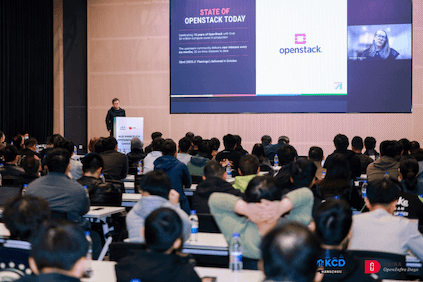
The OpenInfra Summit Europe served as the year’s centerpiece for visibility, convening global contributors, operators, researchers, and industry leaders. The sold-out event of 1,200 registrants emphasized resilience, digital sovereignty, AI infrastructure, and the importance of open alternatives to proprietary cloud platforms. The OpenInfra Summit Europe was community-driven, led by Allison Price and Helena Spease. Highlights included:
- Thierry Carrez keynote about how community-built open source software helps countries and companies be more resilient with their infrastructure, a message that was covered well by attending media, including Computer Weekly.
- Zvonko Kaiser from NVIDIA and Xu Wang from Ant Open Source highlighting Kata Containers' ability to secure AI workloads.
- OpenInfra Members (Canonical, Rackspace Technology, Worteks, Red Hat, and ZConverter) executing five simultaneous demos migrating a workload from VMware to OpenStack. The successful demos highlight the breadth of OpenStack-powered alternatives for organizations reeling from Broadcom pricing increases and was covered by Computer Weekly.
- OpenInfra Foundation executive director Jonathan Bryce and OVHcloud founder and CEO Octave Klaba discussing how OVH fully leverages open source software to build a sovereign public cloud.
- The United Nations International Computing Centre (UNICC) introduced UNIQCloud: a sovereign OpenStack deployment meticulously engineered to meet the unique operational demands of the United Nations.
Additionally, the Open Source Pavilion provided an expanded stage for open infrastructure projects, strengthening cross-community collaboration.
This OpenInfra Summit Europe recap amplified on-site insights and carried momentum online into the broader open source community.
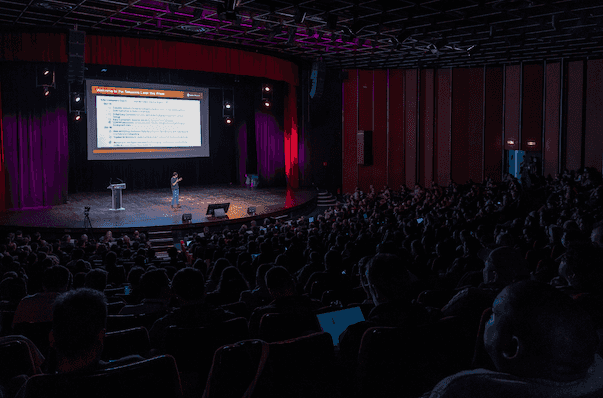
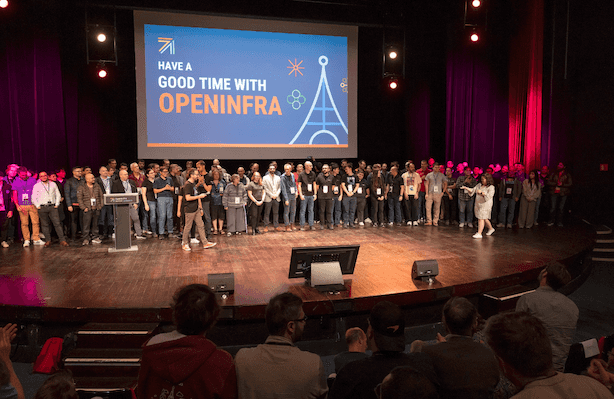
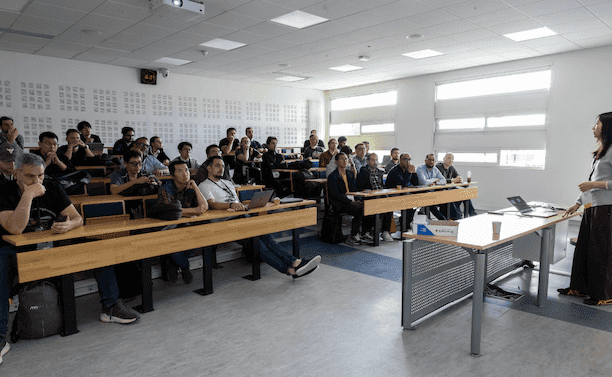
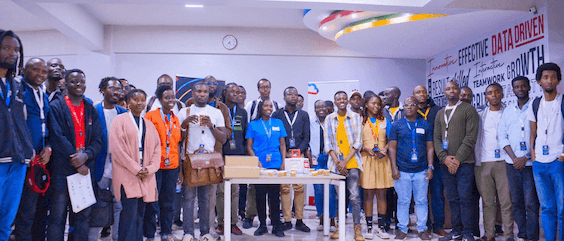
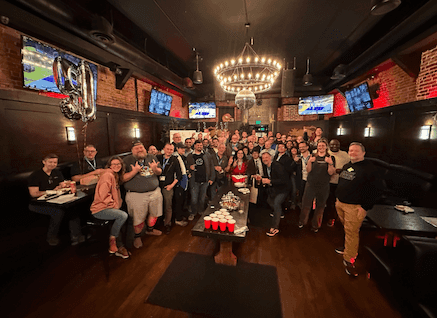
In addition to the OpenInfra Summit Europe, the global OpenInfra community hosted over 60 meetups, including 30 celebrations for OpenStack’s 15th Birthday, connecting over 1,400 community members across the globe. This year, the OpenInfra User Group Poland was added to the global network of meetup groups. In addition to local meetups, the OpenInfra community hosted eight OpenInfra Days reaching over 1,000 community members, including the inaugural OpenInfra Day Kenya, as well as OpenInfra and Kubernetes Community Day China.
Expanded Global Presence Across LF and Industry Events
The Foundation capitalized on the merger with the Linux Foundation to significantly scale visibility across LF-organized events and member engagements. OpenInfra leaders delivered presentations, participated in panels, and met directly with member organizations at:
- KubeCon EU, KubeCon NA, and KubeCon China/Japan/India
- Open Source Summit NA, Europe, Japan, and AI_dev
- LF Member Summit, LF Member Summit Europe, and LF Member Summit Japan
- Inclusion in the LF India Phase 2 Launch
- A keynote slot at the LF Member Summit, reinforcing OpenInfra’s critical role across cloud, security, and AI discussions
In addition, the Foundation and its community showcased OpenInfra technologies at dozens of industry and open source events around the world, including:
- EU Open Source Policy Summit
- FOSDEM + OpenInfra Meetup
- OpenInfra Days across North America, Vietnam, Korea, and China
- StackConf, All Things Open, Open Source Congress, Cloud Operator Day Tokyo, AICon, PyTorch Day China, Open Source Contribution Academy, and more
This global presence strengthened OpenInfra’s position at the center of cloud, AI, and open source infrastructure conversations.
Growing Media, Press, and Public Recognition
Media coverage expanded across traditional press, blogs, and emerging outlets. The OpenInfra Foundation and its projects were featured in thousands of articles, including this small sampling of global trade coverage:
- “OpenInfra Foundation Brings Bootc Container Images to OpenStack” (Cloud Native Now)
- “OpenStack Epoxy 2025.1 Expands VMware Migration, AI Performance” (ITPro Today)
- “Can OpenStack replace VMware to run private virtualisation?” (The Stack)
- “StarlingX 10: Support for Dual-Stack Networking at the Edge” (The New Stack)
- “OpenInfra Unveils StarlingX 10.0” (L’Informaticien)
- “StarlingX introduces v10.0 of open-source cloud platform” (Techzine)
- “New version of StarlingX supports IPv4/IPv6 dual stack & harbor” (Dutch IT Channel)
- “OpenInfra joins the Linux Foundation” (Linux Magazine)
- “OpenStack comes to the Linux Foundation” (TechCrunch)
- “Consortium Driving OpenStack to Become Arm of The Linux Foundation” (DevOps.com)
- “OpenStack in the pink with Flamingo release” (The Register)
- “OpenInfra Summit Europe: Digital Sovereignty in the face of political tension” (Computer Weekly)
- “Europe's plan to ditch US tech giants is built on open source - and it's gaining steam” (ZDNet)
- “OpenInfra Foundation: AI, Digital Sovereignty, and OpenStack” (Heise)
- “OpenStack Aims to Free VMware Customers” (IT Daily)
- “StarlingX 11.0 addresses edge security, IPv4 exhaustion for massive deployments” (Network World)
- “StarlingX Cranks Open-source Cloud Network Infrastructure to 11” (Linux Today)
- “StarlingX update sees a plus 1 for edge protection” (SDxCentral)
- “开源2.0时代:当OpenStack拥抱AI,数字主权与生态韧性如何破局?” (DOIT)
- “OpenInfra 基金会董事会宣布加入 Linux 基金会意向,增强开源全球影响力” (SegmentFault)
OpenInfra technologies were also highlighted in podcasts—including the GR-OSS OUT podcast from G Research, TFIR interviews, and OpenInfra community podcasts. OpenInfra leaders participated in additional recordings such as We Love Open Source and the My Open Source Experience podcast hosted by Ildikó Váncsa and Phil Robb.
The Foundation also endorsed the United Nations Open Source Principles, reinforcing OpenInfra’s alignment with global public-good initiatives and strengthening its reputation as a steward of open, collaborative digital infrastructure.
Expanding OpenInfra’s Reach Through Industry, Policy, and Community Leadership
In addition to the work within OpenInfra project communities, the Foundation staff often shares their specialized expertise with other open source communities or initiatives through elected or appointed leadership positions. In 2025, Thierry Carrez continued to serve on the Open Source Initiative Board of Directors as Vice Chair and member of the Open Container Initiative Trademark Board; Jeremy Stanley served on the Open Regulatory Compliance Working Group at Eclipse Foundation as a Steward Representative on Specification Committee, Software in the Public Interest Board of Directors as Secretary, and Open Source Initiative as Affiliate Representative for Debian GNU/Linux; and Ildikó Váncsa served on the CHAOSS Governing Board.
The OpenInfra Foundation’s engagement in EU policy is a natural extension of its role as a global steward of open source infrastructure and often leverages these non-OpenInfra roles. Through Jeremy Stanley’s leadership roles within the Open Regulatory Compliance Working Group, the Foundation is actively shaping how international regulations, such as the EU Cyber Resilience Act, will impact open source communities. This work includes drafting targeted documentation, coordinating community-wide feedback to policymakers and standards bodies, and ensuring that regulatory frameworks accurately reflect how open source is built and maintained. OpenInfra Europe, one of the regional hubs supported by the OpenInfra Foundation, also contributed to the European Commission's call for comments on the upcoming ‘Cloud and AI development’ act. After joining forces with the Linux Foundation, the OpenInfra staff is also included in their EU policy briefing, provided by Open Forum Europe analysts.
Foundation staff members have also engaged directly with the OpenSSF Security Baseline maintainers, offering input on how to broaden the baseline’s applicability beyond its initial tooling and project scope. As a result, OpenInfra projects are now preparing to incorporate the baseline into updates for vulnerability management and secure development processes, positioning the community to meet the upcoming expectations for CRA Open Source Stewards in 2026.
Sustaining Resilience: Transforming 2025 Momentum into 2026 Opportunity
In 2025, OpenInfra projects saw a significant rise in visibility driven by major technical milestones, market relevance, and proven real-world adoption. Kata Container’s emerging role in securing AI workloads, StarlingX’s renewed conformance achievements, Zuul’s expanding CI/CD presence, and OpenStack’s continued market leadership all reinforced a compelling narrative: open source infrastructure is powering the world’s most demanding workloads, from AI and 5G/6G to scientific computing and sovereign clouds. As AI-driven requirements continue to reshape infrastructure in 2026, OpenInfra projects are well positioned to evolve alongside them, strengthening our community’s shared ability to meet the challenges of a rapidly changing landscape.