Candidates On The Ballot
The candidates on this list have the 10 nominations required to be on the election ballot and have completed the application.
Allison Randal
Allison is an open source software/hardware developer and strategist. She is a governing board member of the Open Infrastructure Foundation, chair of the board at the Software Freedom Conservancy, a board member of LLVM Foundation, governing board member of CHERI Alliance, and co-founder of the FLOSS Foundations group for open source leaders. She previously served as chair of the board at the Open Infrastructure Foundation, president of the Open Source Initiative, president and board member of the Perl Foundation, board member at the Python Software Foundation, chief architect of the Parrot virtual machine, chair of the board at the Parrot Foundation, Conference Chair of OSCON, Technical Architect of Ubuntu, Open Source Advisor at Canonical, Distinguished Technologist and Open Source Strategist at Hewlett Packard Enterprise, and Distinguished Engineer at SUSE. She participates in the Debian, RISC-V, and CHERI projects, works on open source software/hardware security at the research group Capabilities Limited, and has a PhD from the University of Cambridge.

Amy Marrich
Amy has been involved in Open Source since its early years as both an Operator and as an Open Source Software Development Manager. She joined the OpenStack community with the Grizzly release in 2013 while operating a private cloud and started contributing patches during the Mitaka release while at Rackspace. Over the years she has become a Core Reviewer on several projects and has held various leadership roles. She currently serves on the Open Infrastructure Foundation Board of Directors and is Chair of the Goals(formerly Compensation) Committee and a member of the Finance Committee. In addition, she is a member of the OpenStack Technical Committee, chair of the OIF Inclusion Working Group, and previously served as the chair of the OpenStack User Committee. Amy is currently employed at Red Hat as an Open Source Evangelist and Principal Technical Marketing Manager while also serving as the Community Architect for the RDO Project.
ChangBo Guo
ChangBo Guo is consulting architect at EasyStack. As founding engineer of EasyStack, he has held various roles, including engineer, product manager, architect, and participated in every aspect from product design to delivery, and online operation.
He was one of the earliest OpenStack contributors in China. He has been working on the OpenStack since 2012, when he worked on the PowerVM driver under Nova to support IBM Power Systems. He has been contributing several projects like Nova, Neutron, Ironic, Oslo, etc. He was the organizer of China OpenStack user group, and promote OpenStack technologies in several meet-ups in China including Beijing, Xi'an, Chengdu, Shenzhen, etc. He is also keen to help others learn how to contribute in upstream and delivered presentation about upstream contribution for several companies. He attended several design summits and delivered presentations. He served as track chair of upstream development in Barcelona, Boston and Sydney design summit.
He served as Individual Director of OpenStack Foundation in 2017- 2019 and Oslo PTL for Pike and Queens.
Currently, he is enthusiastic about bringing open source projects to universities and involving current students in open source projects

Chris Morgan
My name is Chris Morgan, I'm a dual national US/UK citizen and currently live in Brooklyn working for Bloomberg LP, a financial data provider.
I have worked on OpenStack-based private cloud for Bloomberg for almost fifteen years. I
started off building (and launching production support for) our OpenStack clusters, then I
ran our Cloud infrastructure development team for a few years which developed this product into a critical part of Bloomberg's back-end server complex. Latterly I work as the product owner trying to navigate challenges such as increased compliance regulations and onboarding more challenging applications needing higher performance and reliability.
In addition to my work on our cloud at Bloomberg, I also ran the OpenStack Operators
("ops") meetups for many years and helped us bring together production users of OpenStack in the US, the UK, Japan, Germany, Mexico and Canada.
Recently I proposed a cheaper and easier way to get together virtually using OpenInfra
Meetpad for the "Ops Radio" series of monthly meetings. I hosted several of those in 2025
and they seem to be getting some increased interest. Meetups and ops radio sessions are
documented here: https://wiki.openstack.org/wiki/Operations/Meetups
Prior to OpenStack I worked in performance tuning on both Windows and Solaris and also
helped maintain the Bloomberg Terminal port to SPARC/Solaris. Prior to that I had a brief
stint at a Wall Street investment firm and prior to that worked in embedded command
systems for the UK Royal Navy submarine fleet.
Ghanshyam Maan
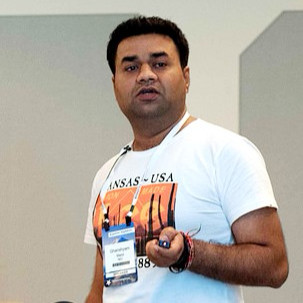
Ghanshyam currently holds several roles within the OpenInfra/OpenStack Community. He serves on the Individual Board of Directors for the OpenInfra Foundation and has previously been the Chair and a member of the OpenStack Technical Committee. As a core developer, he contributes to various OpenStack projects, including Nova and QA, and has also served as the Project Team Lead (PTL) for OpenStack QA.
His journey with OpenStack began in 2012 when he worked as a cloud support engineer. Since 2014, he has focused on upstream development, primarily in areas such as Nova, QA, API stability, and continuous integration/continuous deployment (CI/CD). Ghanshyam is passionate about increasing community participation and often helps onboard new contributors through initiatives like the First Contact SIG, Upstream Institute Trainings, and mentorship programs.
Before his involvement with OpenStack, he gained experience in various fields, including avionics, storage, cloud computing, and virtualization. Ghanshyam started his career as a C++ software developer, where he worked on automating flight management systems to reduce operational costs and ease pilot workloads.
He is also a frequent speaker at numerous open-source events, including the OpenStack Summit, OpenInfra Summit, Open Source Summit, OpenInfra Days, and LinuxCon, covering topics such as RESTful APIs, QA, cloud backup, open source community building, and open source governance. Additionally, he has actively participated in various proof-of-concept (PoC) initiatives and solution designs related to Cloud open-source software.
Huaxing Zhang
In 2017, I joined China Telecom and have since dedicated my career to cloud and network infrastructure products. Over the years, I led a team in designing and developing Virtual Infrastructure Management (VIM) products aligned with OpenStack and ETSI MANO specifications. I also participated in crafting China Telecom’s NFV three-layer decoupling architecture and oversaw the implementation of key projects including 5GC, vIMS, and vBRAS. Our OpenStack-based CT Cloud has been deployed across 31 provinces nationwide and continues to evolve with cutting-edge cloud-network technologies. I firmly believe that the mutual synergy between industry practitioners and the open source community has been pivotal to the sector’s rapid advancement.
Johan Christenson
Johan Christenson is a serial entrepreneur whom has successfully exited multiple companies he founded. After receiving a graduate degree in Engineering, from Florida Institute of Technology, his focus turned to the digital space.
Johan is the founder and CEO of Cleura (former City Network), which offers a global public cloud as well as private clouds for enterprises - all based on OpenStack and other open source projects. Cleuras mission is to enable innovation and focuses on enterprises with regulatory challenges such as within finance, health care of government agencies.
Johan sees OpenStack and open source as a whole, as critical for all enterprises in order to provide options and create competition in an ever more centralized infrastructure world. He, and the team at Cleura, empower new types of industries and markets to use the power of OpenStack, to enable and increase innovation in their organizations.
Josephine Seifert
I have started working at Cloud&Heat Technologies GmbH in 2016 with a project on the security in OpenStack.
We continued this project at secustack GmbH from 2019 to 2023.
Afterwards I joined Cloud&Heat again to work on different topics from standardization of IaaS, documentation and also security features on the IaaS layer, which always focused on OpenStack.
Julia Kreger
I started my working career in technology helping bridge gaps. It started with installing Linux. With time this drifted into Data Center operations, which drifted into systems engineering, and ultimately early cloud computing. It has surely not been an average career, but a career where I've continually learned and evolved to fulfill the need.
The DevOps movement lead me more into software development and the operationalization of software due to the need to automate large scale systems deployments. This required bringing an operational perspective while bridging to the requirements, and often required digging deep into the underlying code to solve the problem of the day.
In a sense, I found a home in OpenStack in 2014 and the Ironic project in 2015 because of many years spent working with physical hardware in data centers.
I presently work for Red Hat as a Senior Principal Software Engineer, where my upstream focus has been Ironic for the past few years, and my downstream focus has been on helping lead adoption and use of Ironic.
Kurt Garloff
I have been working on a building a European Cloud initiative - Sovereign Cloud Stack - for the past 5 years. This is a best-of-breed LOKI stack, and our contractors and employees have been contributing significantly to OpenInfra projects, mainly OpenStack.
Dec 2018 - Dec 2019, I was responsible for the Cloud and Storage Departments in SUSE R&D.
SUSE was a platinum member of the Foundation and a strong upstream contributor back then with good products - I failed to prevent it from changing course, which is why I left.
Before SUSE, I was leading the architecture, community and consulting teams in Deutsche Telekom's Open Telekom Cloud Team.
DT has been a vocal supporter of OpenStack since I joined in early 2012 -- we have been able to run several OpenStack projects. I personally supported the InterOp Workig Group, a key area for OpenStack's success given the centrifugal forces in such a large project. DT has become gold member of the OpenStack Foundation in 2016 and has been headline sponsor for a few summits.
Before joining DT end of 2011 I was a long-time contributor to the Linux kernel, which also gave me the privilege of building up and leading SUSE Labs and work with a number of great engineers in- and outside my company, contributing to the success of the Open Source technology.
I have been serving on the Board of the OpenInfra Foundation as Gold Director for DT and as individual Director 2020-2023, 2025 and in the OpenInfra Europe Advisory Board.
Mohammed Naser
Over the past 10 years, I’m happy to have watched the hosting industry transform and be part of the transformation process as it evolved from traditional physical hardware to cloud-native infrastructure, powered by OpenStack. Since the creation of VEXXHOST, I have had the chance to work with different sorts of customers, ranging from growing small businesses to helping architect solutions for large Fortune 500 companies, based on OpenStack. I've helped integrate other open infrastructure projects into our commercial offering.
By fostering OpenStack at it’s early days in 2011, it has helped improve the project and our service as a whole. I’ve been a contributor to the project since and I have contributed code to almost every release of OpenStack since then. I've also served as PTL for Puppet OpenStack, continue to serve as a PTL for OpenStack-Ansible and serve on the technical commitee, chairing tthe commitee for a term.
Randy Bias
His prescient views on the profound disruption caused by cloud computing have made Randy Bias one of the industry’s most influential voices. He is an evangelist who was among the first to articulate the generational transition of IT from mainframe to enterprise computing and then to cloud in addition to popularizing the cloud server "pets vs. cattle" meme.
Randy was an early and vocal supporter of the OpenStack project and Cloudscaling was part the initial OpenStack launch in summer of 2010. He led the teams that deployed the first public OpenStack storage cloud (Swift) outside of Rackspace, and the first public OpenStack compute cloud (Nova). He was a founding Board Member of the OpenStack Foundation. He continues to be a vocal advocate of OpenStack, through his company, his writing and his speaking engagements.
His voice is frequently heard in media outlets such as GigaOm, InformationWeek, The Economist, Forbes, The Wall Street Journal, ReadWriteWeb, O’Reilly Radar, Light Reading, and others, in addition to the Cloudscaling blog. He is a regular keynote speaker and panelist at events from the OpenStack Summit to VMworld, Structure, eComm, CloudConnect, Interop, CloudBeat, CloudExpo, The Web Summit, and Gluecon.
Ritesh Paiboina
With over 14 years in cloud computing and open source infrastructure, I bring deep expertise in OpenStack, Kubernetes, and cloud native platforms to my role as Chief Technology Officer of Open Telekom Cloud. My career has centered on delivering production-scale open stack cloud solutions, from private OpenStack deployments at Ericsson to sovereign public cloud operations at Deutsche Telekom, where I drive architecture, strategy, portfolio enablement for public cloud provider.
I am passionate about advancing Open Infra standards through operator perspectives, fostering collaboration between vendors, users, and communities to build secure, scalable, and sovereign open cloud ecosystems.

Tony Breeds
Tytus Kurek
Tytus has been a board member of the OpenInfra Foundation since 2020. He is a member of the Finance Committee and is actively involved in the OpenStack community. Over the years, he contributed numerous patches to the OpenStack codebase. He was also participating in the events organised by the OpenInfra Foundation, including summits and PTGs, supporting the foundation in its efforts to spread the awareness of open infra benefits. As a Product Manager at Canonical, Tytus drives the evolution of Canonical’s products and services in the data centre space, including Canonical's Charmed OpenStack distribution. Tytus received his PhD with honours in telecommunications in 2018. His background is data centre administration and cloud engineering.
Xiangyu Li
Xiangyu Li comes from China Mobile Cloud Centre and she has been working here for 8 years. She currently serves as the leader of the General Computing Product Group of the Computing Product Department, taking responsibility for the R&D of the China Mobile Cloud elastic computing system. China Mobile Cloud has become the fastest-growing public cloud in China with the highest revenue growth rate in the past several years. As a member of the China Mobile Cloud architecture team, she participated in multi-phase projects of the China Mobile Cloud and could be considered as the main contributor for guiding China Mobile Cloud to join the Million Core Club. Xiangyu Li has considerable rich work experience in the development and operation of hyperscale public clouds. The elastic computing R&D team which she is leading has achieve multiple great achievements, implementing the scheduling and concurrency optimization for hyperscale clusters carrying more than 100,000 servers. With this optimization, the delivery of 5 thousand cloud hosts could be completed in several minutes. Xiangyu Li is also very active to join community events. She is a frequenter in OpenInfra Summit, China Day and Strategy Day activities. Her team has published dozens of speeches in OpenStack-related community activities, sharing China Mobile's practical and innovation experience in cloud computing.